




A roof leak rarely “fixes itself.” In Louisiana storms and humidity, a small drip can quickly become stained ceilings, wet insulation, mold risk, and damaged decking. If you’re in Shreveport, Bossier City, or nearby areas, this guide explains the most common reasons roofs leak, what you can safely check first, and what information helps you get an accurate repair estimate.
Safety first: what NOT to do when your roof is leaking
- Don’t climb on the roof during rain, wind, or when shingles are wet—slip risk is extremely high.
- Don’t poke holes in your ceiling to “drain” water—this often creates more damage.
- Don’t ignore a small stain—water can travel far from the entry point.
- Do shut off power to any wet light fixtures or outlets and move valuables away from the leak.
Quick triage: what to do in the first 10 minutes
- Catch water with a bucket/towels and protect flooring with plastic.
- If safe, check the attic for wet insulation, dripping nails, or daylight through decking.
- Take photos of stains/drips and note the time + weather conditions.
- Look for patterns: does it leak only in heavy rain or also after light rain?
Most common roof leak causes (and where they show up)
1) Flashing failures around chimneys, walls, and valleys
Flashing is the metal that seals roof transitions. If it’s cracked, lifted, or sealed incorrectly, water can sneak in during wind-driven rain. Leaks near fireplaces, brick walls, or roof-to-wall areas often point to flashing.
2) Pipe boots and vent penetrations
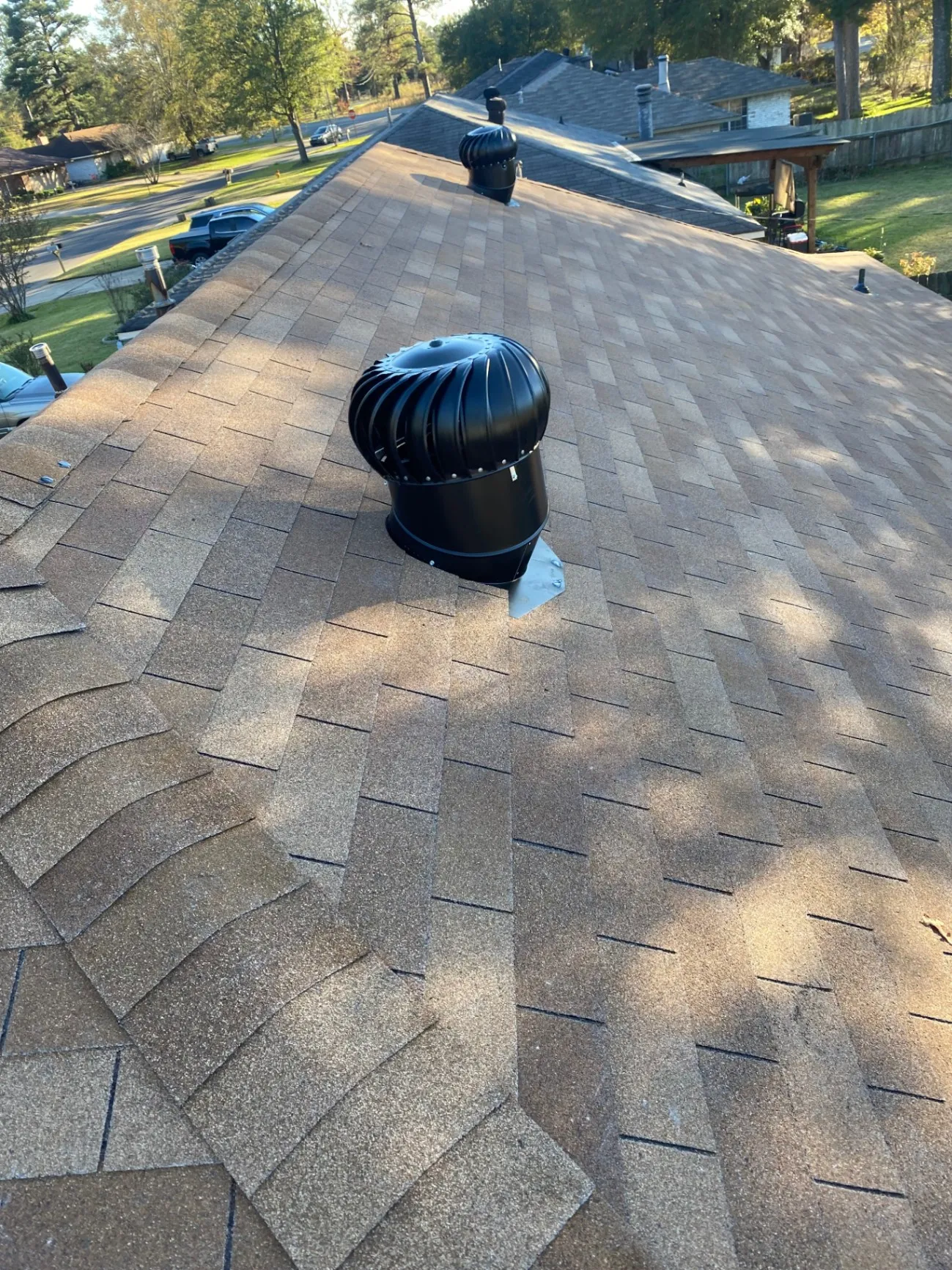
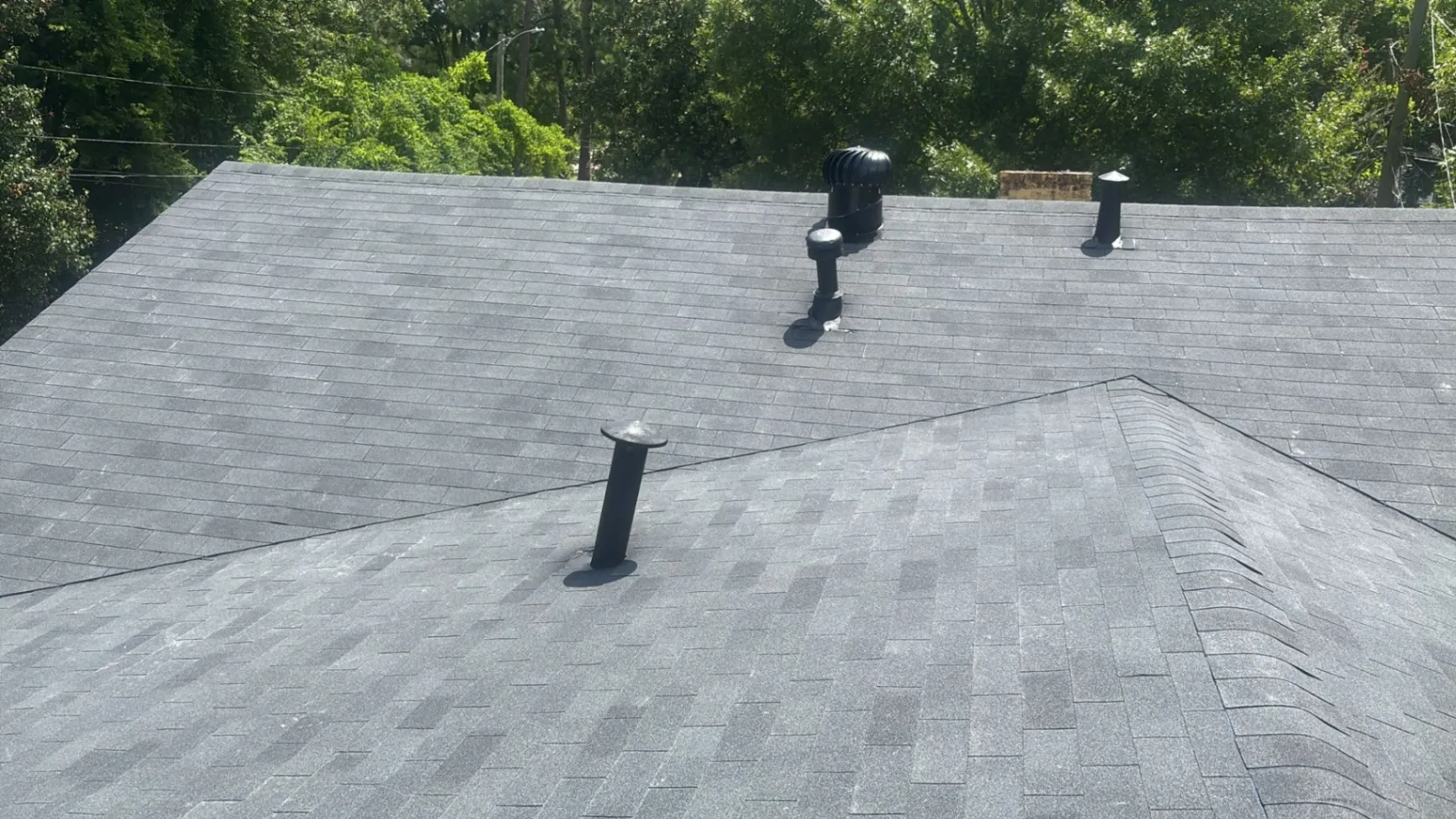
The rubber seals around plumbing vents can dry out or crack over time. A leak that appears “random” but repeats after storms can be a vent boot issue.
3) Missing, lifted, or creased shingles (wind damage)
After strong winds, shingles can lift and break the seal. Even if the shingle looks “mostly fine” from the ground, a crease line can channel water underneath.
4) Clogged gutters and poor drainage
When gutters overflow, water can back up under the edge of the roofing system and soak fascia and decking. If stains appear along exterior walls or near eaves, drainage is a prime suspect.
5) Condensation issues (not always a roof leak)
Sometimes the “leak” is actually condensation from poor attic ventilation or bathroom fans venting into the attic. A proper inspection distinguishes water entry from humidity problems—fixing the wrong thing wastes money.
How roofers find the real leak (because the stain isn’t the entry point)
Water can travel along decking, rafters, or insulation before it shows up inside. A professional inspection usually checks flashing, penetrations, valleys, shingle condition, and attic moisture patterns to locate the source—not just the symptom.
What to tell your roofer (so you get a faster, more accurate quote)
- When the leak happens (only heavy rain, wind-driven rain, or every rain)
- Exact interior location(s) and photos (ceiling stain, wall stain, attic drip)
- Any recent storms, tree limb impacts, or missing shingles you noticed
- Roof age (approximate) and whether you’ve had prior repairs
FAQs
Is a roof leak an emergency?
Active dripping, water near electrical fixtures, sagging drywall, or large wet areas are urgent. Fast mitigation helps prevent secondary damage.
Can I just seal it with caulk or roof cement?
Sometimes temporary sealing can slow water, but it often doesn’t solve the root cause (especially with flashing or shingle lift). A targeted repair is usually safer and longer-lasting.
Need roof leak repair in Shreveport, LA?
Abel Yanez Roofing LLC can inspect the leak source, document what’s happening, and recommend the most cost-effective fix—repair, maintenance, or replacement. If you have active leaking after a storm, reach out for an inspection as soon as conditions are safe.
Need help with your roof?
Get a professional inspection and a clear recommendation—repair, maintenance, or replacement.